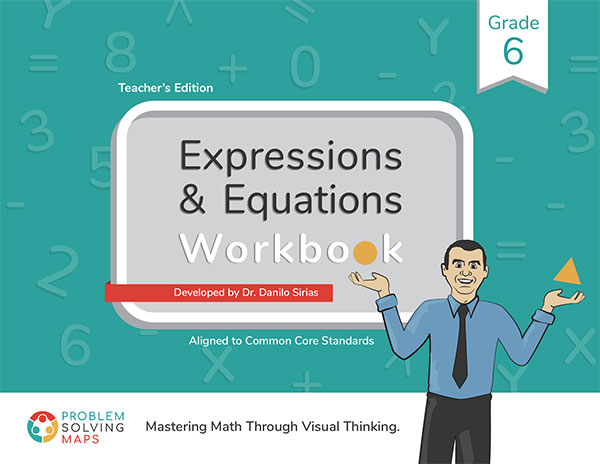
Case Study: Math Workbook for Problem Solving Maps
Problem
IN 2001, Dr. Danilo Sirias, Professor of Management at Saginaw Valley State University, noticed students struggling to grasp mathematical concepts in his business statistics course. Because they did not fully understand the relationships between the concepts they had learned in previous math courses and those introduced in business statistics, many students believed the course required them to learn an entirely new set of ideas rather than connect what they already knew.
This observation made sense to Sirias because traditional math instruction, common in many K–12 classrooms, often focuses on mastering isolated checkpoints in the curriculum, such as fractions or algebraic formulas. With this approach, mathematics can easily become fragmented into separate strategies and tools, making it difficult for students to develop a clear, meaningful, and holistic mental model of how mathematical thinking actually works.
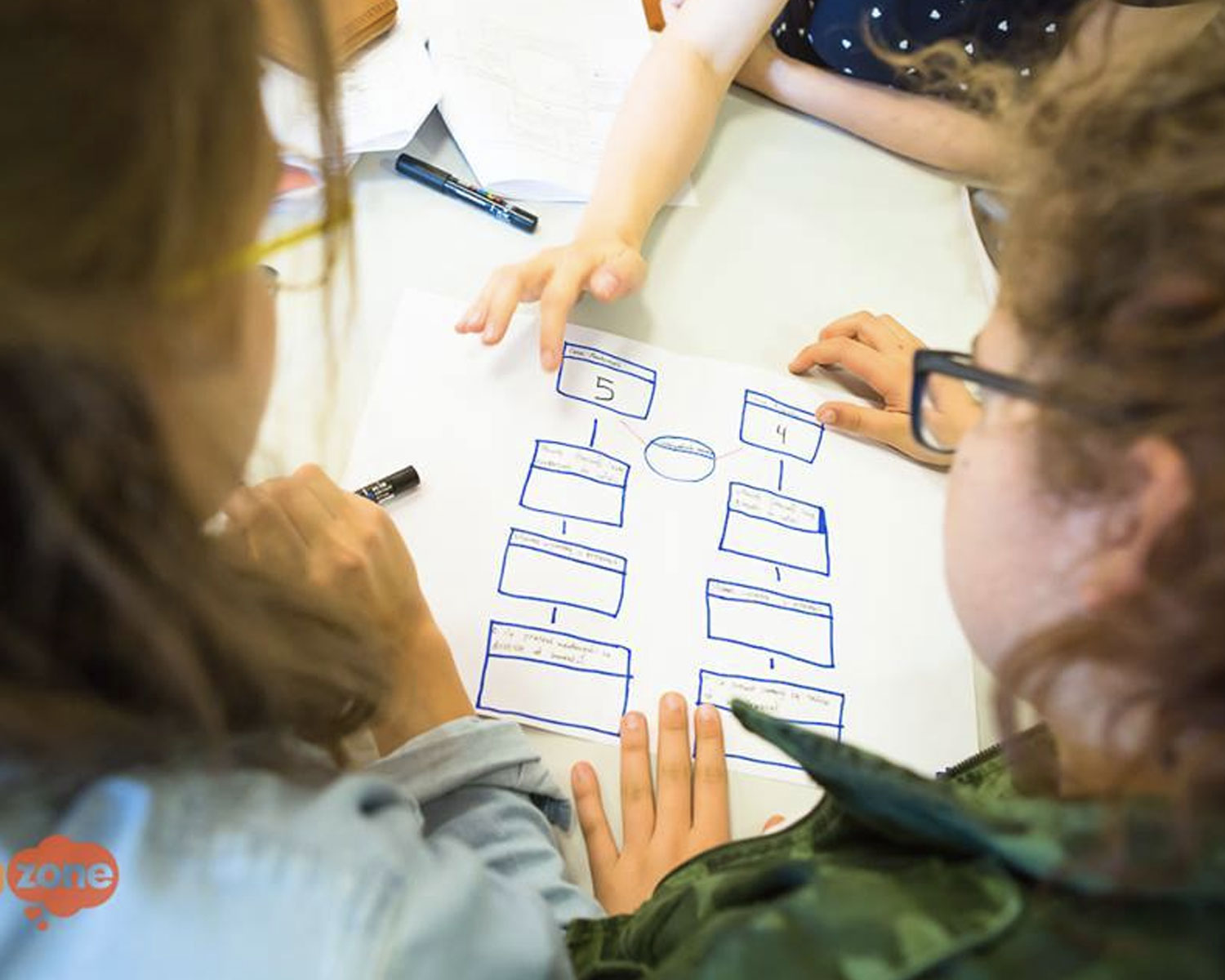
To address this challenge, Sirias began drawing diagrams on the whiteboard in his classroom to visually represent the thinking and reasoning processes behind solving complex problems. To his surprise, these visual maps not only made business statistics easier and more engaging for students but also helped them break down problems and develop critical thinking strategies that could be applied across concepts and subjects. Sirias later began using the maps, which he called Problem Solving Maps (PSM), to help his school-age daughters with their math homework, where he saw similar results.
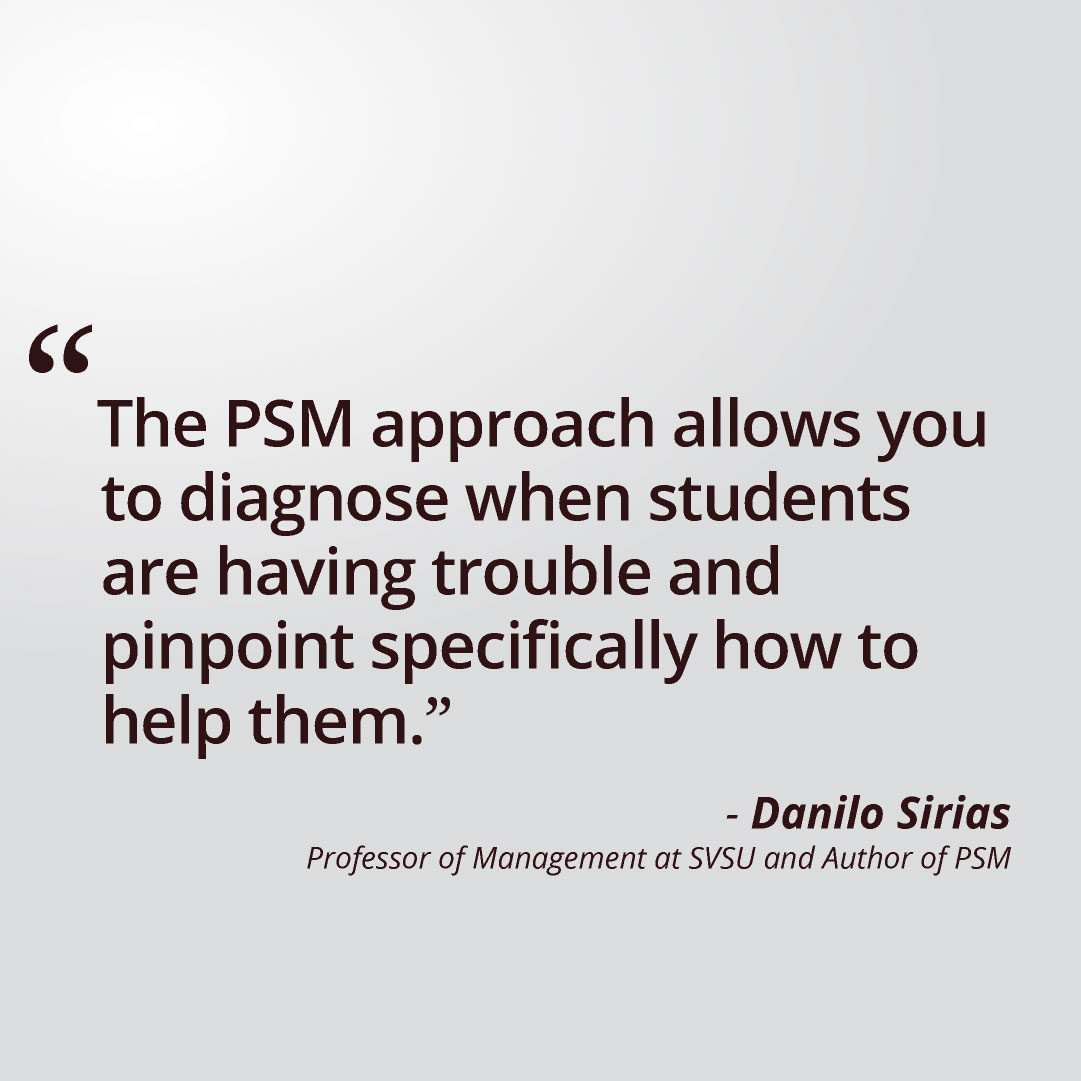
Sirias values the step-by-step structure of Problem Solving Maps because it allows instructors to clearly see where students are struggling and to identify how to help them move forward. Students appreciate the approach as well, since PSM helps them solve problems in an organized way and clarifies their thinking. As problems become larger or more complex, students feel less overwhelmed because they understand how to break the problem into manageable parts—and how each part connects to the larger solution.
Client: (Book 1)
White Pine Middle School
Vikki Wandmacher
Principal, White Pine Middle School
Jennifer Gronski
Project Lead, 6th Grade Math Instructor
Student Specialist:
Colin Mealey
Graphic Design Major
Christie Sinicki
Education Major
Faculty Advisors:
Danilo Sirias
Professor of Management & Founder of Problem Solving Maps
Anne Tapp
Professor, Teacher Education
J. Blake Johnson
Professor of Art / Graphic Design
Client: (PSM Logo/Brand/Website)
Problem Solving Maps
Danilo Sirias
Professor of Management & Founder of Problem Solving Maps
Student Specialists:
Shayla C. Krygier
Graphic Design/Marketing Major
Ashley Ames
Graphic Design / Computer Science Major
Imari C. Tetu
Technical Writing Major
Faculty Advisors:
Danilo Sirias
Professor of Management & Founder of Problem Solving Maps
J. Blake Johnson
Professor of Art / Graphic Design
Client: (Book 2)
Problem Solving Maps
Danilo Sirias
Professor of Management & Founder of Problem Solving Maps
Student Specialists:
Amanda M. Becker
Graphic Design Major
Khairiah Hassan A. Alfaraj
Graphic Design/Marketing Major
Brittany A. Culey
Education Major
Karlie M. MacKay
Math Tutor and CS Alum (Graphic Design)
Chris E. Wisniewski
Illustration - Art Major
Imari C. Tetu
Technical Writing Major
Shayla C. Krygier
Graphic Design/Marketing Major
Faculty Advisors:
Danilo Sirias
Professor of Management & Founder of Problem Solving Maps
Brad Herzog
Professor of Rhetoric and Professional Writing
J. Blake Johnson
Professor of Art / Graphic Design
Client: (Book 3)
Problem Solving Maps
Danilo Sirias
Professor of Management & Founder of Problem Solving Maps
Student Specialists:
Khairiah Hassan A. Alfaraj
Graphic Design/Marketing Major
Karlie M. MacKay
Math Tutor and CS Alum (Graphic Design)
Faculty Advisors:
Danilo Sirias
Professor of Management & Founder of Problem Solving Maps
Brad Herzog
Professor of Rhetoric and Professional Writing
J. Blake Johnson
Professor of Art / Graphic Design
Client: (Book 4)
Problem Solving Maps
Danilo Sirias
Professor of Management & Founder of Problem Solving Maps
Student Specialists:
Karlie M. MacKay
Math Tutor and CS Alum (Graphic Design)
Easton K. Moore
Graphic Design Major
Faculty Advisors:
Danilo Sirias
Professor of Management & Founder of Problem Solving Maps
Brad Herzog
Professor of Rhetoric and Professional Writing
J. Blake Johnson
Professor of Art / Graphic Design
Team
Meanwhile, Professor Blake Johnson from the Art Department reached out to Sirias because both professors were interested in community engagement. He spoke with Sirias about the possibility of creating math workbooks for K-12 students. The project seemed like an ideal fit for Cardinal Solutions, an interdisciplinary program at SVSU directed by Johnson.
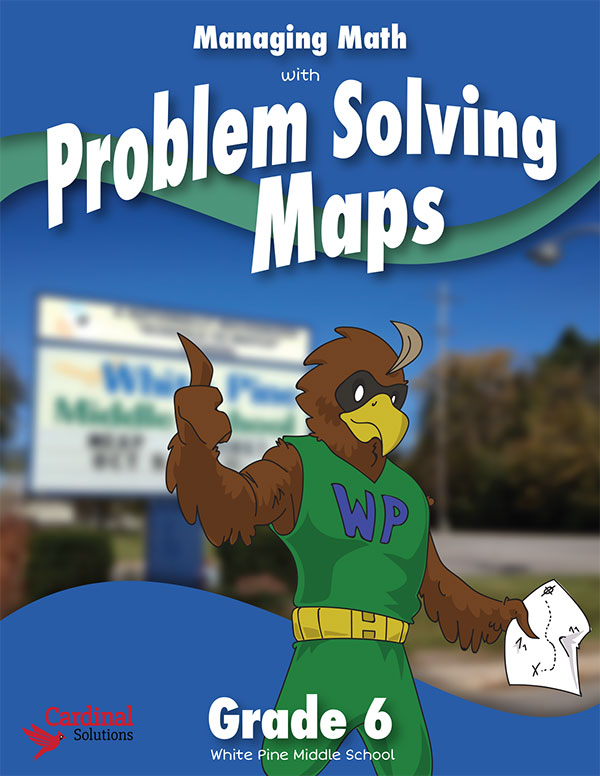
In the first phase, student specialists from Cardinal Solutions created branding materials for Sirias’ workbook and developed a grant proposal to fund the second phase, production of the book. They secured the Foundation Resource Grant from the Saginaw Valley State University Foundation. This award allowed Cardinal Solutions to hire a curriculum developer, who provided sample problems that aligned with common core standards, and seven more student specialists: two graphic designers, one illustrator, two education students, one technical writer, and one marketing student.
Karlie MacKay, one of Johnson’s graphic design students, learned about Problem Solving Maps and the Cardinal Solutions program during a conversation before class. “I mentioned that I had graduated from a different university with an Elementary Education degree but had decided to come back to school and study something else,” MacKay says, “but that I was a private tutor and worked with school-age children on homework and test prep.” Johnson told MacKay that he had been looking for someone to join a project that involved developing math content for middle school using the PSM approach: “The rest is history. I’ve been a part of the project ever since.”
MacKay says she has refined a lot of her soft skills in Cardinal Solutions, from time management and teamwork to creative thinking and communication. “Sometimes we get so caught up in trying to do things all ourselves,” she says, “but by learning how to work with others who think and operate differently than you, you’re truly able to appreciate and value each team member’s strengths. If that’s not teamwork and collaboration, I don’t know what is.”
At this point, Sirias was collaborating regularly with Johnson and a multi-disciplinary team of students to create and produce the Problem Solving Maps workbook. On one hand, the Cardinal Solutions mission lined up well with what Sirias had already been practicing in his classrooms: “As a teacher, I’m used to doing experiential learning,” he says. “Most problems out there need an interdisciplinary approach.” On the other hand, like everyone on the team, he needed to make a conscious effort to overcome the silos created by different vocabularies and mental maps cultivated in different classrooms and place a great deal of trust in people from a vast range of academic and professional backgrounds.
Solution
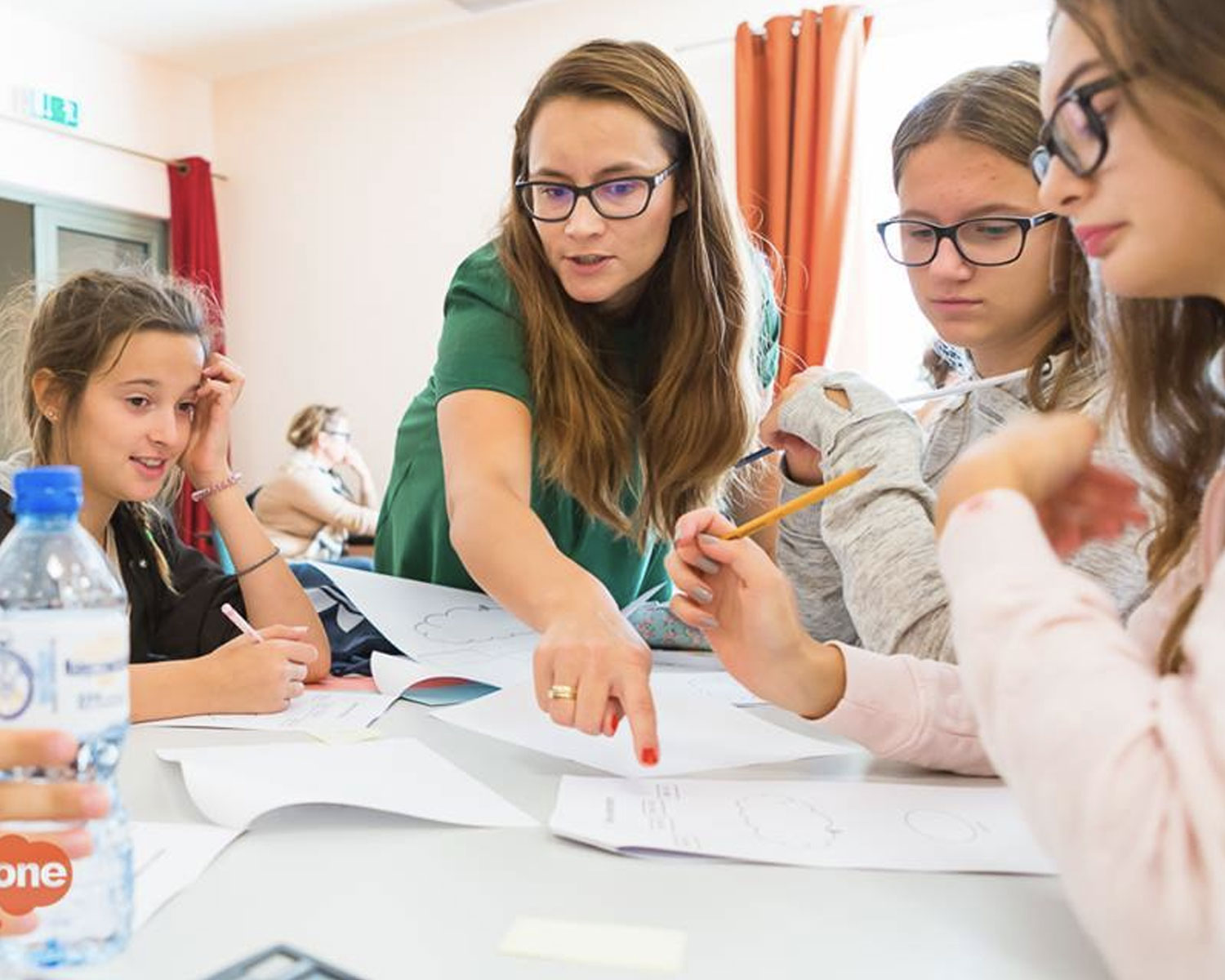
MacKay likes to compare the Problem Solving Maps to training wheels. The maps help the students see how the problem is broken down into manageable, bite-sized pieces. Once they gradually get the hang of it and gather the confidence needed to do the problem(s) on their own, they won’t need the maps anymore. “They’ll feel comfortable and confident enough to tackle the math problems without the map because they’ve started to train themselves on how to break down the problems and ask themselves the necessary questions that will help them reach the answer,” MacKay says. “I’ve always said that the best thing you can do to help a child is to help them learn how to think and learn.”
By helping math students develop critical thinking and problem solving skills, PSM strategies equip them to tackle harder problems in the future because they have learned how to think, not what to think: “Life doesn’t give you the answer key to memorize, so it’s important to be able to look at a problem and not panic in fear but pause, think of a plan to get the problem solved, and go for it!”
MacKay, who uses the maps in her own private tutoring sessions, says the PSM approach can help remedy some aspects of a more traditional approach to math education that make math challenging to learn. For example, students enter class with varying levels of proficiency in math. It is the teacher’s job to teach the material for that day’s lesson, whether or not the students have a solid understanding of the content or even confidence in number sense. PSM breaks down problems in a logical, visual representation so that the students can see how the problem comes together.
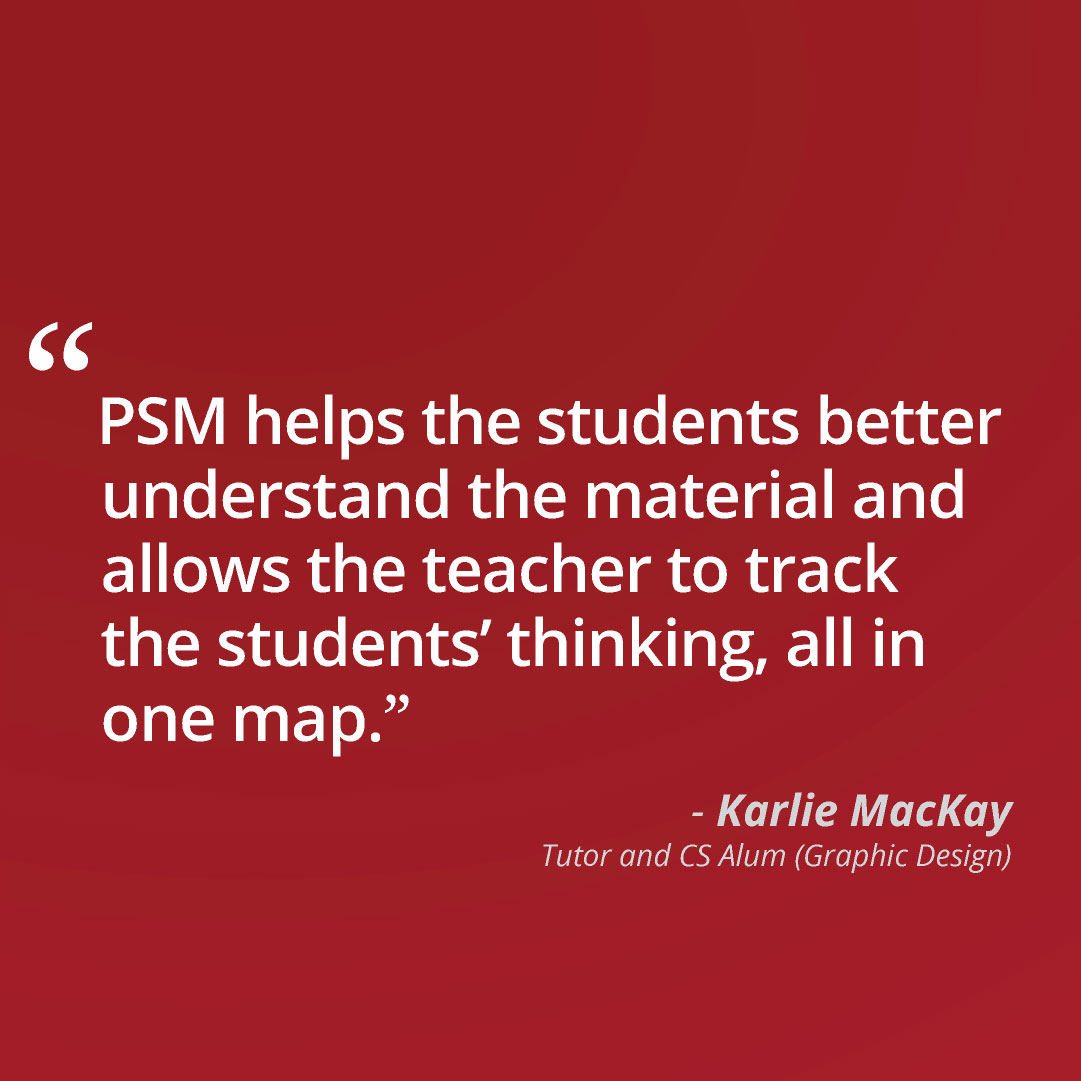
“Teachers don’t have the opportunity to go to each and every student and ask if they understand the lesson,” MacKay says. “By mapping the math problems, the students are able to ask themselves the questions they need to allow them to solve the problems. By giving students a map, teachers are able to see not only the student’s final answer for the problem but how they arrived at that answer. Any box that doesn’t have the correct answer shows the teacher exactly where the student ran into trouble. Plus, if more than one student had an incorrect answer in a given box, then the teacher is able to better target that particular part of the problem. In my opinion, it helps the students better understand the material and allows the teacher to track the students’ thinking all in one map.”
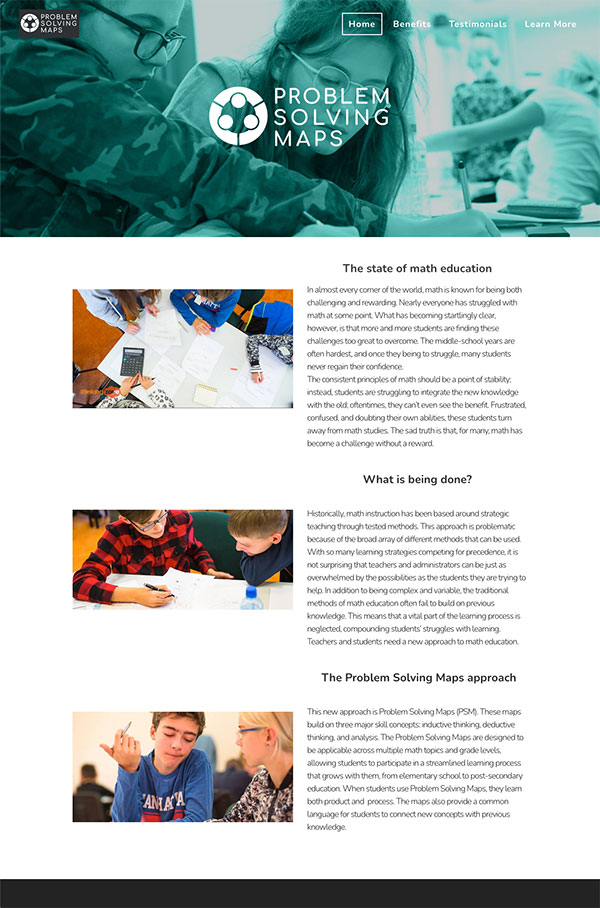
The new logo and brand was designed by Shayla C. Krygier.
Result
Cardinal Solutions has allowed MacKay to make connections and even friendships that she otherwise would not have had the chance to make. “If you’re on the fence about joining, think about what doors would open because you chose to make the leap,” she says. “Join the team and see what great things happen when you bring people and their talents together to accomplish a problem, project, and goal. Life is better with collaboration!”
For Sirias, the most rewarding aspects of his work with Cardinal Solutions are how and to what extent the team translated his vision to reality. “Problem Solving Maps was an idea I had for teaching,” he says. “Cardinal Solutions made it more real. We made it a sellable product.” The maps are used locally at White Pine Middle School. Sirias has also provided training to teachers from other states and educators who teach in the Philippines, Mexico, Poland, Japan, and the Netherlands.
The Problem Solving Maps methodology satisfies teachers’ needs in the classroom by streamlining mathematics education. Educators who use PSM can teach one method to solve many problems instead of many methods to solve many problems. Students have responded well to the workbooks across grade levels, geographic regions, and academic abilities. ■